A diesel truck that pulls or feels unstable at highway speed needs a thorough diagnosis.While many suspect alignment, issues can also stem from tire forces or mechanical problems causing drift, even if alignment appears fine.
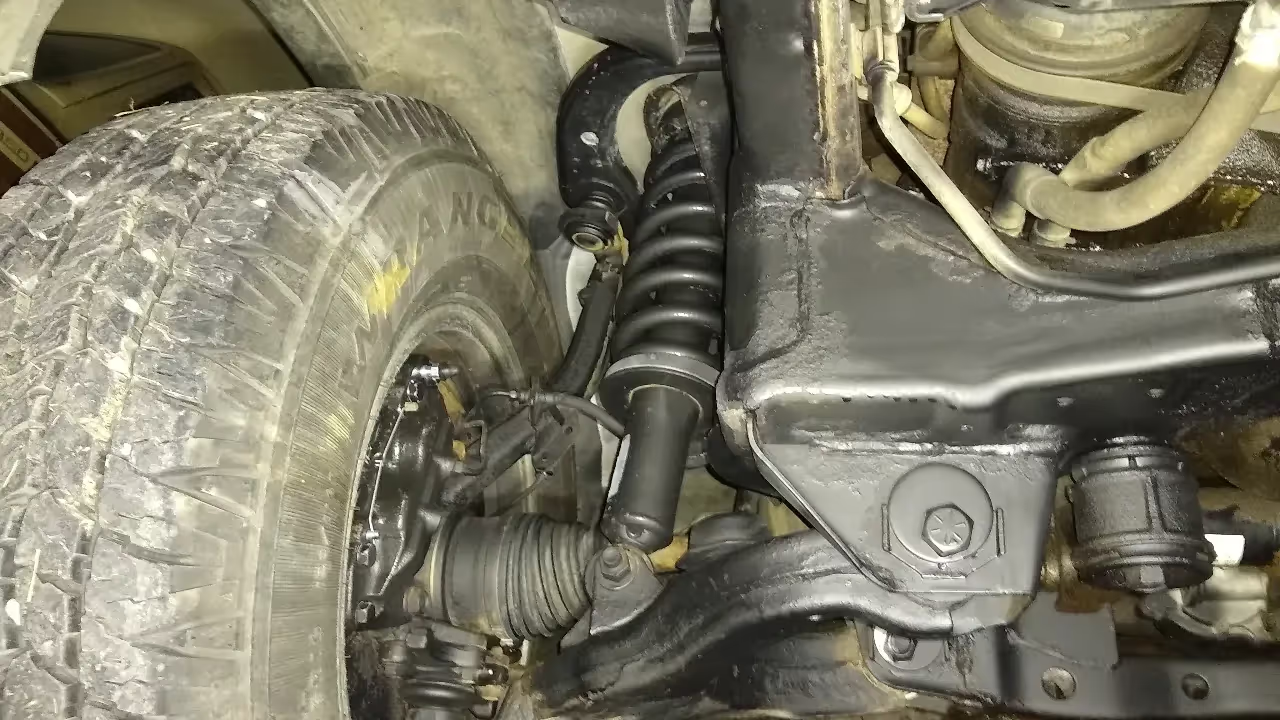
A diesel truck that pulls left or right at highway speed, or feels unstable and needs constant steering correction, is facing a tracking and stability issue that requires a structured diagnosis. Many drivers quickly suspect alignment. In reality, reputable diagnostic guidance treats a pull complaint as a multifaceted problem that can involve alignment geometry, tire-related lateral forces, and mechanical conditions that cause the vehicle to drift or wander even if alignment readings seem acceptable.
Define The Symptom Before You Diagnose Anything
Clear definitions avoid unnecessary effort and having to redo work.
Pulling
Pulling is a consistent tendency for a vehicle to drift to one side while driving straight at a steady speed, requiring steering input to stay in the lane. A true pull usually remains repeatable under the same conditions.
Wandering Or “Loose” Highway Feel
Wandering is different. The truck does not stay on a straight path and feels unstable, especially on uneven pavement, rutted lanes, wind gusts, or after bumps. This is often described as steering wander or loose steering, and it usually indicates insufficient damping control or excessive compliance in components that position the axle and keep consistent tire contact with the road.
The “When” Matters
Before inspecting anything, record when the issue occurs.
- Worse during braking: you should strongly suspect uneven braking forces or brake drag.
- Worse after bumps, dips, or bridge joints: you should suspect inadequate rebound control (often shocks) or looseness that allows the axle to shift after impacts.
- Worse with load changes: suspect ride-height issues (air systems), sag, or worn locating components that respond differently under load.
How Suspension Stability Works At Highway Speed
A heavy-duty suspension must perform two essential functions for stable tracking.
- Support weight and distribute it evenly. The truck and cargo load must be balanced across suspension components, and poor loading practices can overwhelm what the suspension can reasonably compensate for.
- Absorb impacts and control rebound. Suspension must prevent road impacts from damaging systems not designed to absorb shock. The component that controls rebound and prevents wheel bounce after a pothole is the shock absorber; if wheels are allowed to bounce, handling quality significantly worsens.
These fundamentals clarify why many “alignment problems” don't respond to adjustments until the suspension is restored to a state that allows it to maintain proper geometry under load.
Suspension Types And Why They Pull Or Wander Differently
Leaf Spring Suspensions
Leaf spring systems consist of stacked, curved metal leaves and rely on leaf spring hangers and related mounting points to allow movement while keeping the axle in place. The practical implication is simple: if hangers, bushings, shackles, or mounting points wear out, the axle may shift slightly, causing the truck to feel like it is steering itself.
Air Suspensions
Air suspensions are more complex but offer variable strength. Bags can be deflated for comfort when unloaded and inflated for extra support when carrying heavy loads. The practical implication is straightforward: if the ride height isn't even side-to-side or front-to-rear, the geometry and load distribution change, and the truck may pull or wander even if the steering system is otherwise in good condition.
Suspension Causes Of Pulling You Can Actually Fix
Worn Locating Components That Let The Axle Move Under Load
If a component’s job is to hold the axle in position and it no longer does, alignment values become “temporary.” At highway speeds, even small shifts cause a steady drift. On leaf-spring trucks, focus on spring eye bushings, shackles, hangers, and any signs that the axle is no longer square to the chassis. In other suspension setups, worn bushings in axle-locating arms can cause similar dynamic-geometry shifts. What you can do:
- Inspect for uneven ride height, visible bushing deterioration, or signs of hardware movement.
- Replace worn bushings and hardware before doing the front-end alignment.
Rear-Axle Shift That Feels Like A Front-End Pull
A rear axle that is not securely held in position can cause a steering effect you notice at the wheel. Many drivers mistake this for a front-end problem because they feel it through the steering wheel, but the rear axle can also affect yaw stability and lane tracking when driving at high speeds. What you can do:
- Inspect the rear leaf spring mounting points and hardware for any looseness or deformation.
- First, restore the axle location. Then, assess the steering correction needs.
Incorrect Air Suspension Ride Height
Air systems are designed to maintain proper height under different loads. If one side is low, the truck’s stance shifts, weight distribution becomes uneven, and tracking can suffer. When the truck is aired up or down to meet specific operating conditions, handling may also change because the suspension isn't operating within its proper range. Here's what you can do:
- Check the ride height on level ground.
- Identify and fix the root cause of height deviation (leak, control issue, or mechanical binding).
- Re-test tracking before authorizing alignment.
Suspension Causes Of Steering Wander And Loose Steering At Highway Speed
Weak Or Failed Shock Absorbers
Shock absorbers are essential for rebound control. They absorb road impacts through their internal hydraulic system and prevent wheel bounce. When shocks lose damping ability, the truck may feel unstable after bumps and might need constant small corrections to stay straight, especially at highway speeds.
This isn't just an abstract idea. Industry guidance explains that shocks and struts are safety-critical chassis components that can wear out over time; the negative effects may include reduced steering accuracy and reduced vehicle stability, even if the driver doesn't immediately notice the decline. What you can do:
- Inspect shocks for leaks, damaged mounts, or other signs of failure.
- Replace shock absorbers in pairs on each axle to ensure balanced left-to-right damping.
Excess Compliance In Axle Location Hardware
A truck can wander at speed when components that should keep the axle in place instead allow it to shift after impacts. In leaf-spring suspensions, hangers and mounting points are crucial for maintaining stable motion and axle positioning. When they wear out, the truck may feel “floaty” or inconsistent because the axle doesn't return to the same spot after each bump. What you can do:
- Inspect hangers, shackles, bushings, and mounts for looseness or deformation.
- Resolve location issues before trying to “tune” the problem with alignment adjustments.
Wheel-End Problems That Imitate Suspension Looseness
Wheel-end bearings and races enable wheels to spin at high speeds with minimal friction. Increased friction generates more heat, which can damage components. Bearing failure often results in overheating, smoke, and metal-on-metal screeching. Importantly, severe bearing failure can weaken the entire wheel assembly.
Wheel-end issues may cause wandering, vibration, or vague tracking because the wheel is no longer precisely controlled at the hub. From a safety perspective, symptoms related to wheel-end problems should be considered urgent, not optional. Here's what you can do:
- Inspect any wheel-end heat, unusual noise, or suspected play right away.
- Verify wheel-end integrity before continuing with alignment or further suspension adjustments.
Non-Suspension Checks You Should Not Skip
Although this article focuses on suspension, a thorough diagnosis must eliminate common non-suspension causes that often mimic suspension problems.
Tire-Related Pull And Conicity
Tire-related lateral forces, including conicity, can cause a vehicle to pull even if alignment is within specifications. A common diagnostic method is a left-to-right front tire swap test: if the pull shifts direction, the tire is likely the cause. Here's what you can do:
- If the pull is consistent and repeatable, swap the front tires side to side within safe testing limits.
- If the pull direction changes, check the tire condition before adjusting alignment values.
Brake Drag And Uneven Braking Force
Brake drag can cause a constant pull and is often linked to excessive heat, a strong smell, and an increased risk of component damage. If the pull becomes more noticeable when braking, any uneven braking force or sticking parts should be checked quickly. Here's what you can do:
- If symptoms worsen while braking, include an early brake inspection.
- Treat heat and odor indicators as significant, not trivial.
A Diagnostic Sequence That Produces Repairs That Hold
A stable result depends on performing the work in the correct order. Alignment should be the final calibration step, not the first guess.
- Identify the symptom type. Determine whether the issue is pulling, wandering, braking-dependent pull, or a combination of these.
- Rule out tire problems and obvious tire force issues. Use the front tire side-to-side swap test when appropriate.
- Check stance and ride height. For air systems, fix air-suspension ride-height issues before proceeding with a deeper diagnosis.
- Check rebound control. Inspect and replace shock absorbers on matched axle pairs as needed.
- Inspect axle location components. Focus on leaf-spring hangers, bushings, shackles, and mounting points as applicable.
- Inspect wheel ends. Check for any bearing heat, noise, or suspected play right away.
- Inspect the brakes if they affect the symptom. Fix drag or imbalance before performing alignment.
- Perform front-end alignment last. Alignment is most effective once the truck can maintain geometry under actual operating loads.
Preventive Practices That Reduce Highway Pull And Wandering
Preventive maintenance is a systematic approach to inspecting, servicing, and maintaining components to prevent breakdowns and extend operational life. It differs from reactive maintenance because it focuses on identifying and resolving problems before they cause major failures. A well-organized preventive maintenance schedule can enhance performance, reduce the risk of costly downtime, and support long-term savings—especially in heavy-duty operations operating under demanding conditions. Specifically, for highway stability, high-impact preventive practices include:
- Routine shock inspections: because shock wear can happen gradually, and loss of stability might not be obvious early.
- Routine suspension location inspections: because axle location hardware can wear and cause tracking issues even before a major failure occurs.
- Immediate response to wheel-end symptoms: because bearing failure indicators include heat and metal-on-metal noise and can escalate to serious integrity concerns.
- Load discipline: because improper loading can weaken the suspension’s ability to evenly distribute weight and keep the vehicle tracking stable.
If you operate in San Bernardino, Los Angeles, Riverside, Orange County, or Anaheim, CA, and your truck pulls, wanders, or feels unstable at highway speeds, schedule a stability-focused inspection with A Plus Mobile Maintenance. A suspension-first diagnosis helps you fix the cause, avoid repeat alignments, and restore predictable highway control.
Conclusion
A diesel truck that pulls or feels unstable at highway speeds usually cannot be fixed reliably with alignment alone. Suspension systems must evenly distribute load and control rebound; when shocks lose damping, when axle hardware wears, or when ride height is off, the truck can wander or pull even if alignment readings seem acceptable. A systematic diagnostic process—checking tires and ride height first, shocks and axle hardware next, wheel ends and braking as needed, and alignment last—produces lasting repairs.

Contact A Plus Mobile Maintenance
Get in touch with A Plus Mobile Maintenance today for mobile truck repair and fleet services. We provide service to San Bernardino, Riverside County, Los Angeles County, Orange County, Anaheim, & more!